

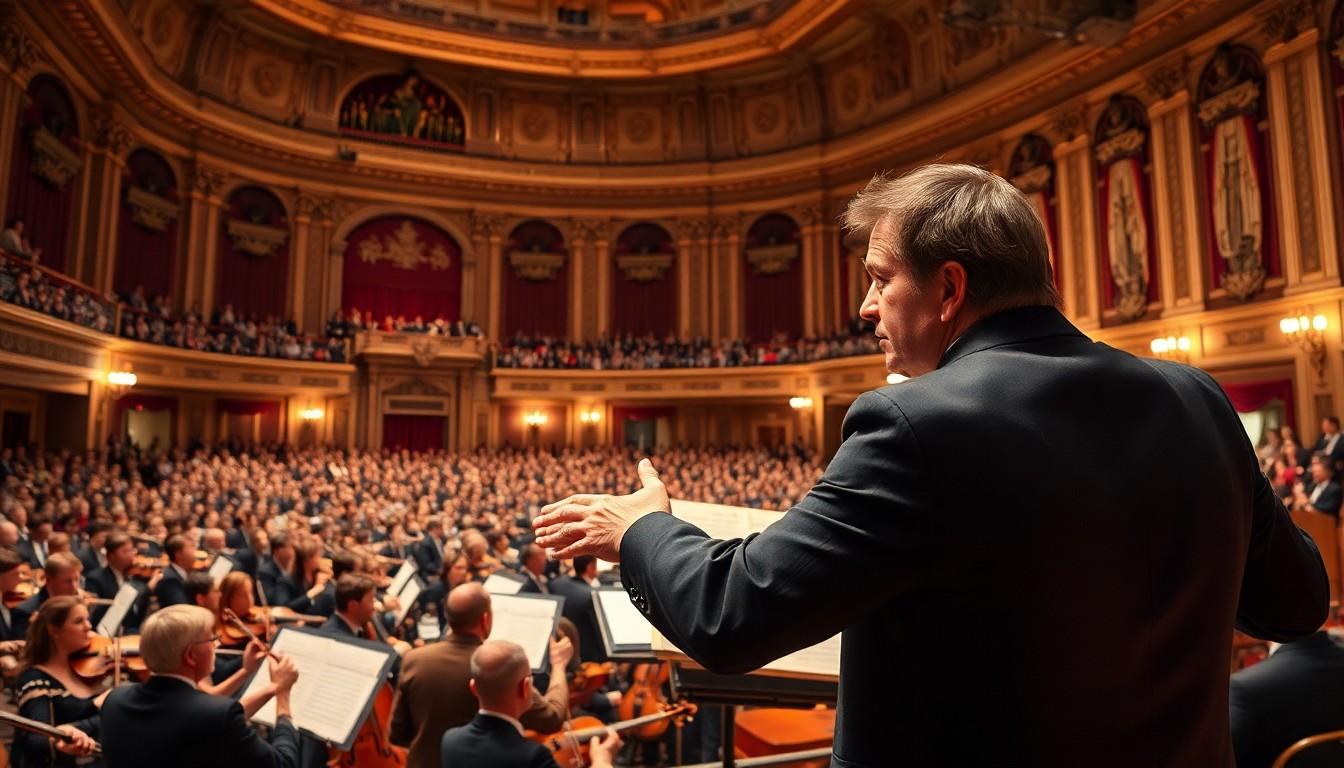
Classical music isn’t just a genre; it’s a time machine that transports listeners through centuries of creativity and passion. From the elegant court of Louis XIV to the smoky cafes of Vienna, this rich tapestry of sound has shaped cultures and inspired generations. But let’s be honest—who doesn’t love a good symphony while pretending to sip tea in a velvet armchair?
Overview of Classical Music
Classical music spans several centuries, reflecting diverse styles and cultural shifts. Originating in the medieval period, the genre incorporates various forms, from chant to orchestral compositions. The Renaissance era introduced polyphony, enriching musical texture and complexity.
With the Baroque period, composers like Bach and Vivaldi emerged, showcasing intricate melodies and harmonic structures. The Classical period, defined by composers such as Mozart and Haydn, emphasized clarity and balance. During this time, symphonies and sonatas took shape, creating lasting frameworks for future musicians.
Romanticism brought emotional depth, with composers like Tchaikovsky and Brahms pushing expressive boundaries. The 20th century saw innovation with new genres and styles, such as minimalism and avant-garde, reflecting contemporary society’s complexities.
Throughout its history, classical music demonstrates adaptability, continuously evolving while maintaining its core traditions. Festivals and concerts worldwide celebrate this genre, fostering appreciation across diverse audiences. Instruments from strings to woodwinds play vital roles, each contributing unique sounds to orchestral arrangements.
Eminent compositions stand as benchmarks, influencing generations. Works like Beethoven’s Ninth Symphony and Stravinsky’s “The Rite of Spring” remain iconic, showcasing classical music’s enduring impact. This rich history highlights its relevance, making classical music a pivotal force in global culture.
Early Beginnings of Classical Music

Classical music’s origins trace back to ancient civilizations, laying the groundwork for future developments.
Ancient Music Traditions
Ancient Greece and Rome prominently influenced early music traditions. In Greece, scholars like Pythagoras studied musical intervals, connecting harmony to mathematics. The Romans adopted Greek ideas, incorporating music into various aspects of society, including ceremonies and entertainment. Instruments like the lyre and flute emerged, establishing a foundation for melodic structures. Written notation also began during this era, enabling composers to preserve their creations for future performances.
Medieval Period Developments
The medieval period marked a significant evolution in music, characterized by the development of Gregorian chant. Monophonic textures dominated early music, with chants serving religious purposes in cathedrals and monasteries. Innovations like neumes, early notation systems, facilitated the transcription of melodies. Polyphony gradually gained prominence, allowing multiple independent melodies to coexist, enriching the musical landscape. Composers such as Léonin and Pérotin played crucial roles in this transition, shaping the future of Western music.
The Renaissance Era
The Renaissance Era marked significant progress in classical music, reflecting broader cultural changes. This period spanned roughly from the 14th to the 17th century, emphasizing humanism and creativity in art and music.
Key Composers and Works
Josquin des Prez stands out as a pivotal composer of this time. His mastery of intricate polyphony transformed vocal music, influencing countless musicians. Giovanni Pierluigi da Palestrina’s compositions exemplified the sacred music of the era, particularly with masses and motets that showcased clarity and balance. Thomas Tallis, an English composer, also contributed to the richness of this period, with works like “Spem in Alium” emphasizing choral capabilities. These composers and their notable works marked the evolution and depth achieved during the Renaissance.
Evolution of Musical Styles
Musical styles evolved significantly during the Renaissance. The introduction of humanist ideals encouraged a focus on emotion and expression. Innovations in harmony allowed for more complex textures, enhancing the listening experience. Instrumental music gained prominence alongside vocal compositions, with the lute and viol becoming popular. Additionally, the development of music printing facilitated wider distribution of musical scores, helping to shape regional styles. The blending of sacred and secular elements in music characterized this transformative era, laying the groundwork for future developments in classical music.
The Baroque Period
The Baroque period, lasting from roughly 1600 to 1750, marked a significant evolution in classical music. This era introduced new styles that emphasized emotion and grandeur.
Major Compositional Techniques
Composers employed several distinct techniques during this time. Use of ornamentation added expressiveness to melodies. Counterpoint became increasingly intricate, showcasing the interplay between independent musical lines. Rhythmic diversity also flourished, with composers experimenting with different patterns to enhance the music’s emotional depth. The use of basso continuo provided harmonic support, creating a texture that characterized Baroque music. These compositional techniques collectively enriched the musical landscape, setting the stage for future innovations.
Influential Figures and Their Impact
Several influential figures emerged, shaping the Baroque music scene. Johann Sebastian Bach, with his mastery of counterpoint, left a profound legacy through works like “The Well-Tempered Clavier.” Antonio Vivaldi popularized the concerto form, notably through “The Four Seasons,” blending virtuosic violin playing with vivid imagery. George Frideric Handel contributed significantly to opera and oratorio, with pieces like “Messiah” resonating beyond his time. Each composer brought unique elements, ultimately transforming how music was created and experienced. Their impact resonated through the centuries, influencing generations of musicians and composers.
The Classical Period
The Classical period, roughly spanning from 1750 to 1820, exemplified balance and clarity in music composition. This era emphasized formality and structure alongside emotional subtleties.
Characteristics of Classical Music
Melody played a central role during the Classical period, often characterized by clear, singable lines. Formal structures like sonata-allegro and rondo became prevalent, guiding composers in their work. Symphonic orchestration expanded, leading to a rich blend of instruments creating more dynamic performances. Dynamics featured prominently, highlighting contrasts between loud and soft passages. Themes developed through variations and transformations, inviting listeners into a musical journey.
Prominent Composers and Their Contributions
Wolfgang Amadeus Mozart emerged as a quintessential figure, known for his operas like “The Marriage of Figaro” and symphonies that displayed remarkable creativity. Joseph Haydn, often referred to as the father of the symphony, contributed significantly to the string quartet format, elevating chamber music. Ludwig van Beethoven challenged conventions, merging Classical structure with Romantic emotion, particularly evident in his late piano sonatas and symphonies. Each composer played a crucial role in shaping the trajectory of classical music, ensuring the period’s enduring legacy.
The Romantic Era
The Romantic Era flourished during the 19th century, emphasizing emotional depth and personal expression in music. Composers sought to connect with audiences on a profound level, exploring themes of love, nature, and the human experience.
Emotional Expression in Music
Emotional expression took center stage during the Romantic Era. Composers used rich harmonies and dynamic contrasts to evoke feelings passionately. Music became a vehicle for storytelling, where each note conveyed emotion. Compositions often featured sweeping melodies that resonated deeply with listeners. The focus shifted toward individual experience, allowing each audience member to interpret the music personally. This era marked the rise of program music, where instrumental pieces depicted specific narratives, highlighting the emotional journey of the listener.
Notable Composers and Innovations
Notable composers defined the Romantic Era with their groundbreaking innovations. Pyotr Ilyich Tchaikovsky crafted ballets like “Swan Lake” and “The Nutcracker,” blending emotion with captivating melodies. Johannes Brahms interwove traditional forms with innovative ideas, enriching the symphonic repertoire. Franz Liszt revolutionized piano composition, introducing the symphonic poem and advancing technical prowess. Richard Wagner pushed boundaries in opera, emphasizing the idea of Gesamtkunstwerk, or total artwork, blending music, drama, and visual arts. These composers contributed richly to the era, influencing future generations and setting the stage for contemporary classical music evolution.
The 20th Century and Beyond
The 20th century showcased remarkable growth within classical music, marked by innovation and diversification. Various styles and genres emerged during this period, reflecting shifting cultural landscapes.
Emergence of New Styles and Genres
Modern composers embraced experimentation, leading to a multitude of new styles. Minimalism gained traction, with composers like Steve Reich and Philip Glass emphasizing repetition and gradual transformation in music. Avant-garde movements reshaped traditional approaches, allowing artists to explore unique soundscapes. Neoclassicism revived classical forms with contemporary sensibilities, as Igor Stravinsky and Sergei Prokofiev incorporated traditional elements into innovative compositions. Additionally, electronic music’s integration into classical compositions introduced new textures and possibilities. Jazz influences also shaped classical idioms, with figures like Leonard Bernstein blending styles to celebrate artistic freedom.
The Global Influence of Classical Music
Globalization expanded classical music’s reach beyond Western boundaries. Composers from diverse backgrounds infused their cultural heritage into classical music, enriching its language. Influential figures such as Tan Dun and Osvaldo Golijov drew inspiration from their roots, creating distinctive sound worlds. Festivals and collaborations across continents further facilitated cross-cultural exchanges, allowing for a fusion of styles and traditions. With orchestras now performing worldwide, audiences experience a broader spectrum of classical music. Education programs have also cultivated appreciation, ensuring future generations connect with this timeless art form.
Classical music’s journey through history showcases its profound impact on culture and society. Each era brought innovations that shaped the genre’s evolution and its ability to resonate with audiences. From the intricate polyphony of the Renaissance to the emotional depth of the Romantic period, classical music reflects the human experience in all its complexity.
As it continues to evolve, classical music remains a vital part of global culture. Its ability to adapt and incorporate diverse influences ensures that it will thrive for generations to come. The legacy of its greatest composers lives on, inspiring new artists and captivating listeners around the world.

